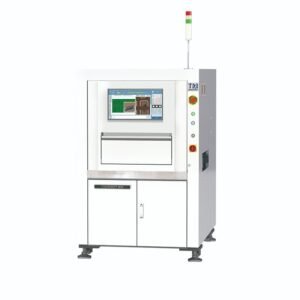
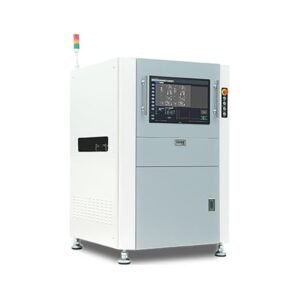
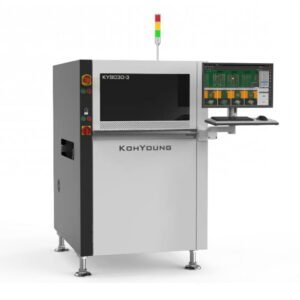
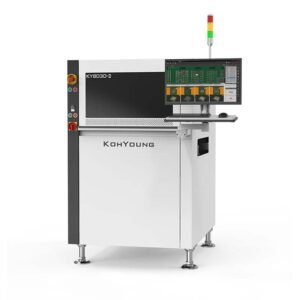
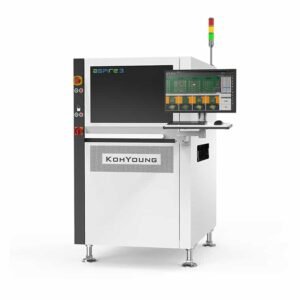
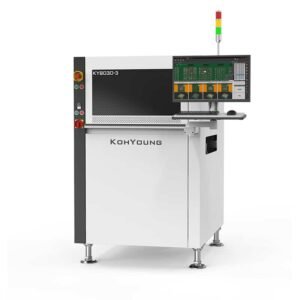
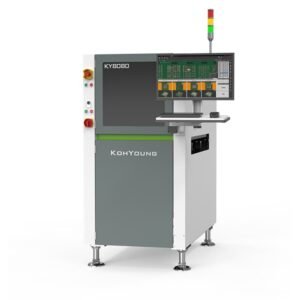
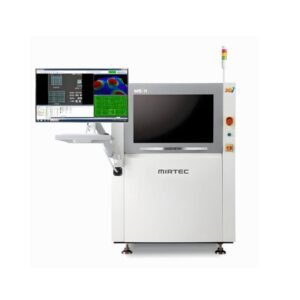
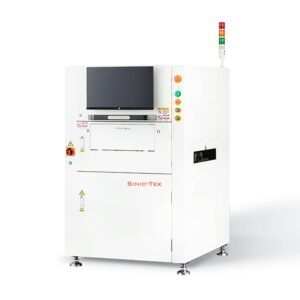
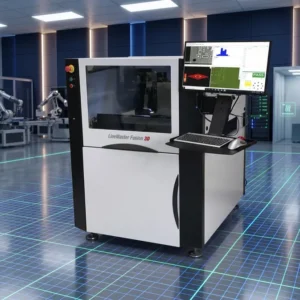
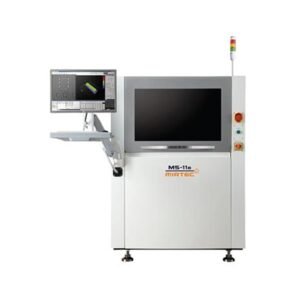
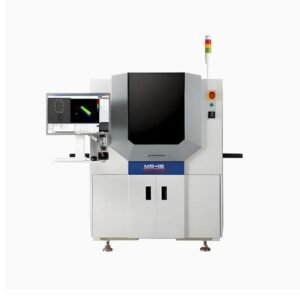
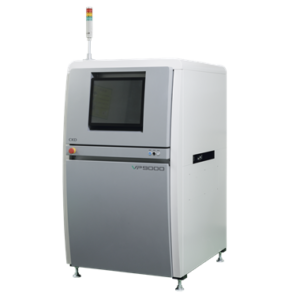
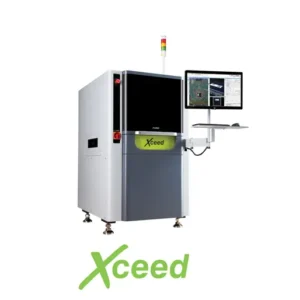
Solder paste printing causes the majority of defects in SMT assembly — industry studies put paste-related faults at 50–70% of all soldering failures. A SMT SPI machine (Solder Paste Inspection) measures every deposit right after printing, so volume, height, area and alignment errors are caught before components are placed and reflowed. That means less rework, less scrap, and far fewer field failures.
THOMAO supplies new and refurbished SMT SPI machines for electronics manufacturers, EMS providers and repair centres worldwide, backed by spare parts, installation support and technical guidance.
Inline 3D SPI — Mounted directly behind the stencil printer and linked through SMEMA, inline 3D SPI inspects 100% of boards at full line speed. Laser or phase-shift technology captures true paste height and volume, making it the standard choice for high-mix, high-volume SMT lines.
Offline / Standalone SPI — A bench-top or standalone unit for sampling checks, small batches, NPI and printed-circuit-board verification. Lower cost, no line integration required — ideal for labs, repair stations and low-volume production.
2D vs 3D Inspection — 2D SPI measures printed area and position only, which is enough to detect bridging and gross misalignment. 3D SPI adds height and volume measurement, so it can also flag insufficient paste, scooping, and coplanarity problems that 2D simply cannot see.
Paste volume, height, area and coplanarity per pad
X-Y print offset and rotation against Gerber/CAD data
Bridging, smearing, insufficient or excess paste, voids
Automatic program generation from Gerber and CAD files
SPC charts, CpK reporting and defect trend analysis
Optional closed-loop feedback to the printer for automatic parameter correction
Our SPI systems interface with DEK, MPM, Speedline and other mainstream stencil printers, and connect to Panasonic, Yamaha, Fuji and Siemens SMT lines through standard SMEMA handshakes. Tell us your printer and line configuration and we will confirm the matching model before shipment.
Do I need SPI if I already run AOI? Yes — they solve different problems. SPI inspects the paste before reflow and prevents defects; AOI inspects solder joints after reflow and detects them. Used together, SPI removes the root cause while AOI verifies the result, which typically cuts AOI false calls and rework dramatically.
Can SPI run with my existing printer? In most cases yes. Inline SPI sits behind the printer and communicates via SMEMA; offline units need no integration at all.
Do you provide training and spare parts? Every machine ships with documentation, and we support installation, programming training and long-term spare parts supply.
Not sure which inspection resolution or cycle time fits your line? Send us your board size, minimum pad pitch and line speed — our engineers will recommend the right SMT SPI machine and quote it within one working day.
Showing all 14 results